Product Manager
Ox - Warehouse Automation Startup
Human-centered warehouse automation platform
Built software that reduces operator onboarding from days to 15 minutes, serving enterprise 3PLs processing thousands of daily shipments across fulfillment centers.
- Early-stage startup: Joined post-seed, grew through Series A (20→50 people)
- 3+ years: Shipped vendor integrations, built a 0-to-1 product, and led a year-long platform rebuild
What I shipped
Vendor Integration
Worked closely with CS and business teams who led customer conversations — my role was gathering requirements, understanding the customer's as-is warehouse processes, and turning that into a to-be workflow with our product.
- Requirements → Product: Took what I learned from customer calls and translated it into PRDs, user stories, epics — then broke those down, pointed them, and prioritized the backlog for engineering
- Workflow mapping: Documented user journeys and workflow diagrams to map how our product fits into existing warehouse operations
- Legacy system integration: Partnered with an old-school IBM green screen WMS vendor — navigated the technical partnership to determine how we exchange data, build APIs, and integrate systems
- Prioritization: Balanced vendor integration work against other product needs, making sure we were tackling the right things for the right customers at the right time
Platform Infrastructure
Original APIs were built for one customer with customer-specific terms. Couldn't scale. Led a year-long initiative with the CTO and engineering team to rebuild into a modular, scalable architecture.
- 3x customer scaling: Platform could now support multiple enterprise customers simultaneously across different fulfillment center configurations
- Faster onboarding: New customers went live in weeks, not months
- 20% throughput latency improvement: Better performance across fulfillment operations
- 20% infrastructure cost reduction: Optimized spending while scaling
- Cross-functional advocacy: Advocated for platform investment over short-term feature requests with CS directors and business stakeholders — explaining technical trade-offs to non-technical audiences. The infrastructure enabled every customer we onboarded after.
0-to-1 Product: Visibility Dashboard
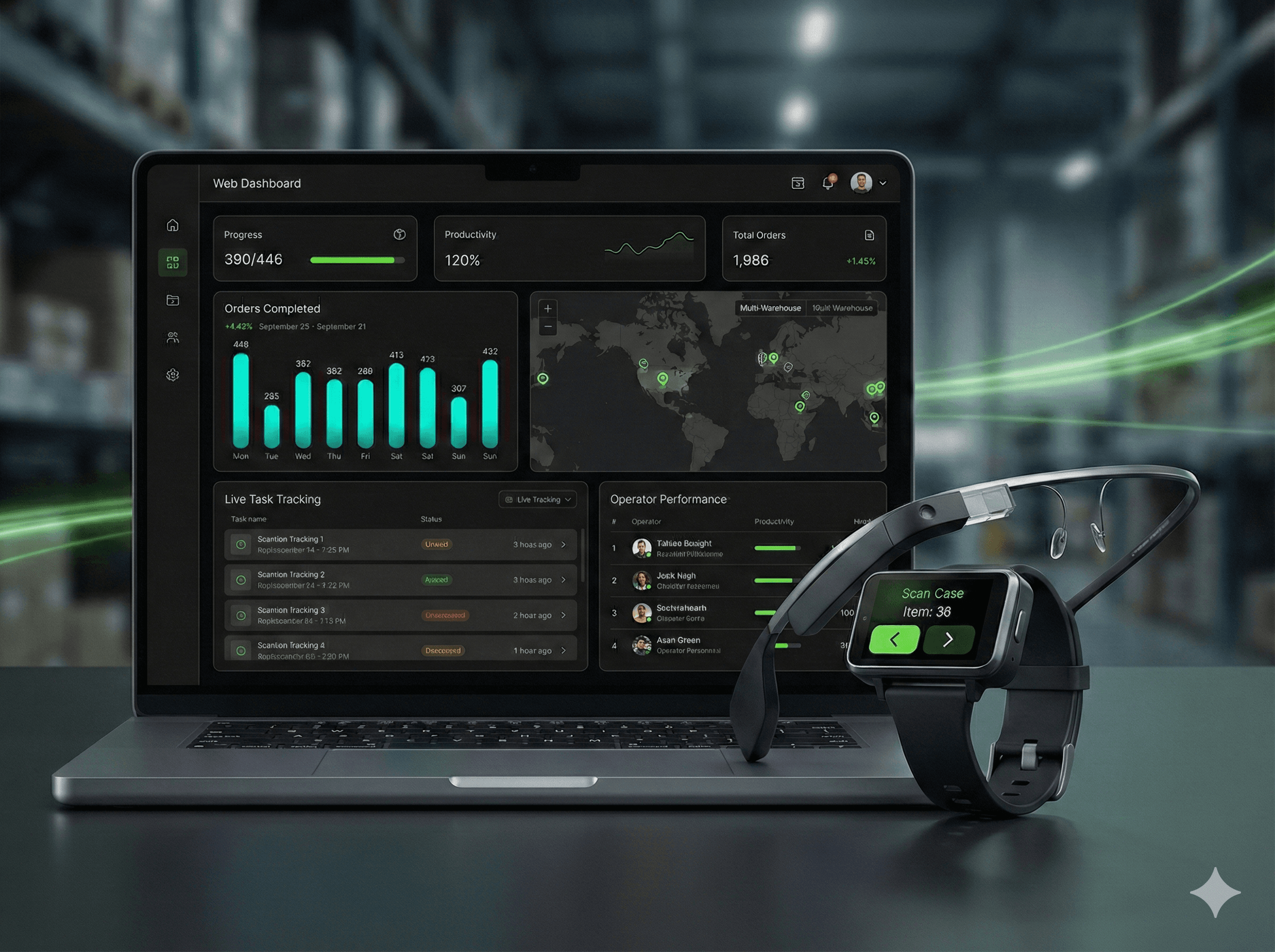
Operators had our app telling them what to do — but warehouse managers and executives had no view into what was happening. The CPO had the seed of the vision — I turned it into an actual product through research, user interviews, understanding their processes and pain points, and building out the full product requirements.
- Full product lifecycle: Research, user journey mapping, scoping, PRDs, development, launch, iteration
- Data-driven decisions: Real-time operational data on labor productivity, order throughput, and fulfillment metrics — giving warehouse managers and executives the visibility they needed to make informed decisions
- NPS 70+: Managers loved having live visibility into tasks and operator performance
- Signature product: Shifted sales conversations from operators (users) to decision-makers (buyers), attracted new enterprise customers
- Self-serve functionality: Eliminated CS burden for user management, letting warehouse managers handle their own team configurations
How I worked
-
With Engineering: Engineering is the most precious resource at a startup. My job was to protect that resource — allocate it as effectively as possible, shield them from unnecessary meetings, and make sure they were always working on the highest-impact items. I partnered with directors on architecture and infrastructure decisions, but I also listened to individual engineers. Their ideas for technical improvements often went unheard — I pulled those voices up and brought them to the table.
-
With Business/CS: Close collaboration, constant communication. We were all trying to add value — onboard customers faster, solve the right problems. It was a team effort. I made sure we were prioritizing the right features for the right customers at the right time.
-
In a fast-paced environment: In a startup, everything feels like the most important thing. My role was to step back, bring clarity, and identify what actually drives value. Ran Agile/Scrum ceremonies — standups, sprint planning, backlog grooming — to keep everyone on the same page and moving in the same direction.
Reflection
Three years in warehouse automation taught me more than I expected. I came in knowing nothing about supply chain — I left deeply interested in the industry, in how warehouses actually work, and in how human-centered automation can make those operations better.
The best part was the team. Working with a great team on hard problems — that's the thing I value most from my time at Ox.
Tools Used
Related Articles